


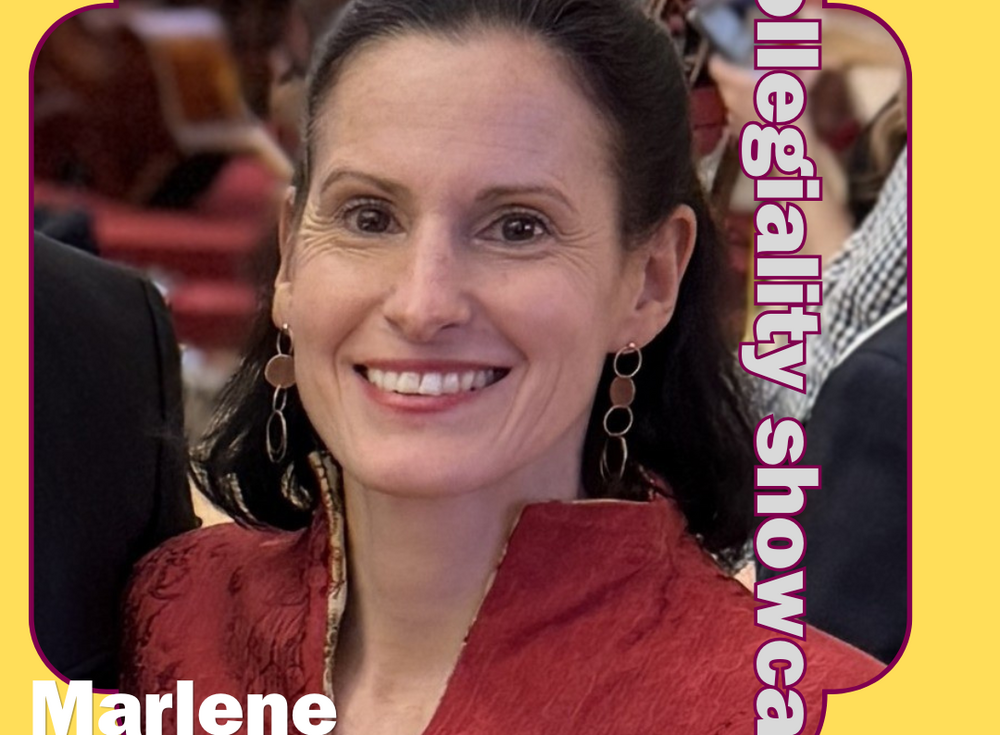
What can we learn about leadership from Roman Law? And what motivates Uni Graz scholars to work towards a fair research culture that fosters diversity? We spoke to Marlene Peinhopf, Senior Scientist at the Institute of the Foundations of Law, about this for our latest “Collegiality Showcase”. Marlene Peinhopf served in the AKGL (working group for equal opportunities) for more than six years, her research focusses on Roman Law, and she teaches History of Law and Latin. In both teaching and research she emphasises gender and diversity aspects, as well as outreach to schools and the wider society.
Here are her three answers to our three questions.
1) Which activities for contributing to a positive research environment are most important in your view, and what is your personal contribution to this cause?
One of the most important factors are the colleagues you work with, the exchanges with like-minded people. It does not have to be an official event like a seminar or a workshop, more often it is an informal setting where you get the best input into your work, inspiration for new approaches, ideas for rethinking your own theories. This can be having a coffee together in one of the offices or discussing work topics at an after-work-drink.
For good research outcomes a pleasant atmosphere is indispensable. In my opinion it is very important to be open to criticism, to welcome any feedback, and to treat all colleagues as equals. Mutual respect is the be-all and end-all. You have to create an environment in which nobody is afraid of making mistakes. Otherwise, people do not have the intellectual freedom and confidence to do excellent research.
2) What do you personally get out of your engagement for a more collegial academia?
If someone contributes to a collegial environment, they automatically profit from it also. When working in a pleasant, open, respectful atmosphere, you can spread your wings, be completely yourself and fully concentrate on your research. As a simple rule, you should treat others as you would like to be treated yourself. Getting on well with colleagues is very inspiring for me.
3) What would you suggest to others who are starting out on their collegial leadership path?
Let me cite the famous praecepta iuris of Ulpian: Honeste vivere, alterum non laedere, suum cuique tribuere (to live honorably, to injure no one, to give to everyone his due). What applies to society as a whole also applies to the microcosm of the university, where the same mechanisms are at work.
I think it is all about „Fördern und Fordern” (challenge and support). The head of a department or the supervisor of a master’s thesis or a dissertation should support young researchers in every possible way on their academic path, introduce them to the scientific community at conferences, always be ready to listen, and believe in them even when they are doubting themselves. We must always see more potential in young people than they believe they have!
Thanks a lot, Marlene Peinhopf, for taking the time to answer our questions!
The Research Careers Campus Graz showcases people and networks which shape our research environment here in Graz - towards a more collegial, friendly and diverse academia, where all research talents can thrive. More here.
Picture credit: Peinhopf, privat.
Interview: Johanna Stadlbauer, RCC, 29.4.2026