Begin of page section:
Page sections:

  • Go to contents (Accesskey 1)
  • Go to position marker (Accesskey 2)
  • Go to main navigation (Accesskey 3)
  • Go to sub navigation (Accesskey 4)
  • Go to additional information (Accesskey 5)
  • Go to page settings (user/language) (Accesskey 8)
  • Go to search (Accesskey 9)

End of this page section. Go to overview of page sections

Begin of page section:
Page settings:

English en
Deutsch de
Search
Login

End of this page section. Go to overview of page sections

Begin of page section:
Search:

Search for details about Uni Graz
Close

End of this page section. Go to overview of page sections


Search

Begin of page section:
Main navigation:

Page navigation:

  • University

    University
    • About the University
    • Organisation
    • Faculties
    • Library
    • Working at University of Graz
    • Campus
    Developing solutions for the world of tomorrow - that is our mission. Our students and our researchers take on the great challenges of society and carry the knowledge out.
  • Research Profile

    Research Profile
    • Our Expertise
    • Research Questions
    • Research Portal
    • Promoting Research
    • Research Transfer
    • Ethics in Research
    • Commission for Scientific Integrity
    Scientific excellence and the courage to break new ground. Research at the University of Graz creates the foundations for making the future worth living.
  • Studies

    Studies
    • Prospective Students
    • Students
    • Registration for Study Programme (Winter semester 2026/27)
    • Welcome Weeks for First Year Students
  • Community

    Community
    • International
    • Location
    • Research and Business
    • Alumni
    The University of Graz is a hub for international research and brings together scientists and business experts. Moreover, it fosters the exchange and cooperation in study and teaching.
Topics
  • Sustainable University
  • Researchers answer
  • Work for us
Close menu

End of this page section. Go to overview of page sections

Begin of page section:
You are here:

University of Graz Research Careers Campus Graz News How to do a pre-task metacognitive check (Shiva Taghizadeh)
  • Team & Organisation
  • Training offers
  • Services & Funding
  • Showcasing Collegiality & Good Leadership
  • News
  • Events

End of this page section. Go to overview of page sections

Wednesday, 15 July 2026

How to do a pre-task metacognitive check (Shiva Taghizadeh)

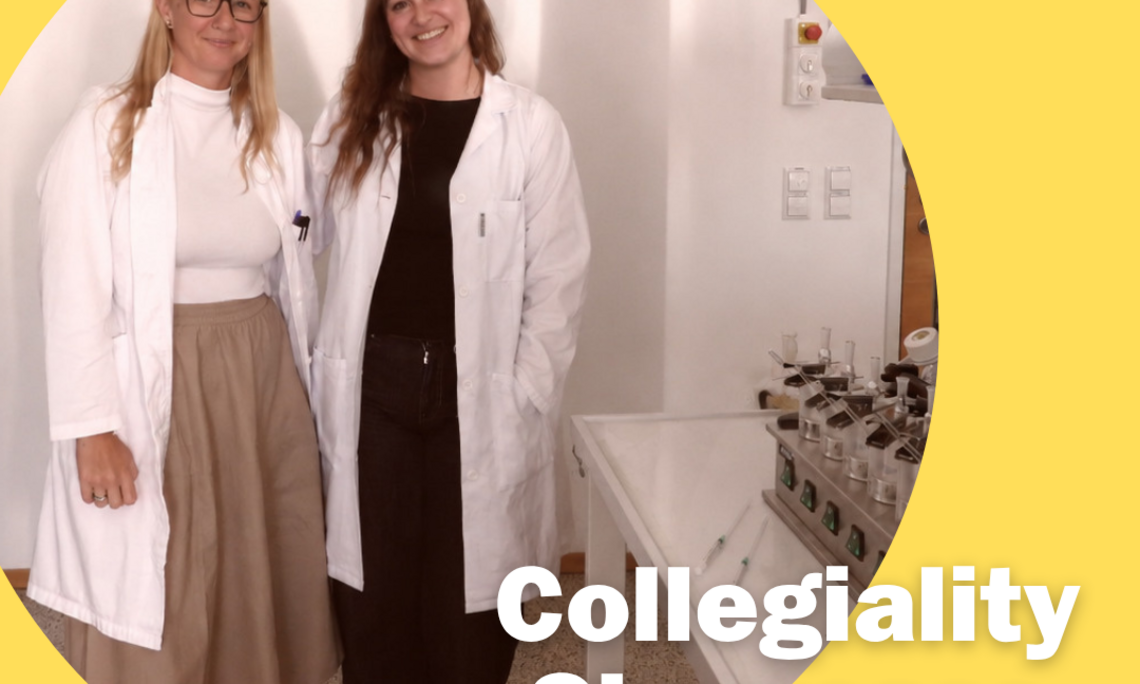
Portrait Taghizadeh, Picture credit: Taghizadeh, Privat

Read what works at work in our interview series with Uni Graz researchers

This summer, we're all about making space in your work life for those things YOU consider a priority. So we've asked our University of Graz researcher community about aspects of their daily work life that they have developed a useful routine for - and aspects that still need a “research life hack”.

Interview partner: 

  • Shiva Taghizadeh, Department of Psychology 

Shiva Taghizadeh's daily work: 

“I am a PhD researcher in the Department of Psychology at the University of Graz. As a project assistant, my work sits at the crossroads of cognitive psychology and educational neuroscience — I try to understand what happens in the brain when people think about their own thinking while they are solving a math problem. What makes them confident they got it right — or aware they got it wrong? In more technical terms, I study the neurocognitive mechanisms underlying metacognition, specifically in mathematics and arithmetic. Both math and the self-monitoring process fascinate me."

The "happy hack" that makes Shiva more efficient/creative/motivated at work:

"If we skip sports, one practice that has genuinely changed how I work is what I call a "pre-task metacognitive check" — and yes, I do find it true that research is “me” search, a metacognition researcher has learned to use metacognition as a productivity tool. Before I sit down to a demanding task, whether that's designing an EEG paradigm, analysing data, or writing a difficult section of a paper, I spend about five minutes writing down three things: what I am trying to achieve, what I already know about it, and where I expect to get stuck. It sounds simple, but it forces me to be honest with myself about my actual knowledge gaps before I start, rather than discovering them mid-flow and losing momentum. My research tells me this kind of deliberate self-monitoring reduces cognitive overload, and my experience confirms it. I am calmer, more focused, and far less likely to end the day feeling like I was busy but not productive."

And the challenge in her research life that she still needs a hack for:

“Honestly? Switching off. I study how people regulate their cognition, and yet I have not cracked the code on how to stop my own brain from running experiments in the background at eleven at night or waking up at four in the morning to spot a mistake in my analysis code. PhD research has this way of bleeding into every quiet moment — a finding that does not quite replicate, a new idea that arrives exactly when you should be sleeping. I know the research on cognitive rest and how critical it is for memory consolidation and creative insight. I know it intellectually. I just have not found my personal ritual for actually doing it. If anyone has a hack for that, I'm interested.”

What is your own happy hack? Let us know!

Find the full series of interviews here: How to hack your research life - Research Careers Campus Graz

(Interview: Johanna Stadlbauer, 29.6.2026, picture credit: Jessica Karkheck)
Related news

July round of RCC grants awarded: 76 applications funded

Micro-grants for researchers of all career stages to promote their visibility

Dates to watch out for after the summer for PhDs

Mark your calendars with these dates planned by the RCC for you as a PhD this coming autumn/winter term!

How to hack your research life

Read interviews with University of Graz scholars about effective practices for motivation and creativity

How to stimulate the creative part of your mind (Bojana Radovanović)

Read what works at work in our interview series with Uni Graz researchers

Begin of page section:
Additional information:

University of Graz
Universitaetsplatz 3
8010 Graz
Austria
  • Contact
  • Web Editors
  • Moodle
  • UNIGRAZonline
  • Imprint
  • Data Protection Declaration
  • Accessibility Declaration
Weatherstation
Uni Graz

End of this page section. Go to overview of page sections

End of this page section. Go to overview of page sections

Begin of page section:

End of this page section. Go to overview of page sections