This summer, we're all about making space in your work life for those things YOU consider a priority. So we've asked our University of Graz researcher community about aspects of their daily work life that they have developed a useful routine for - and aspects that still need a “research life hack”.
Interview partner:
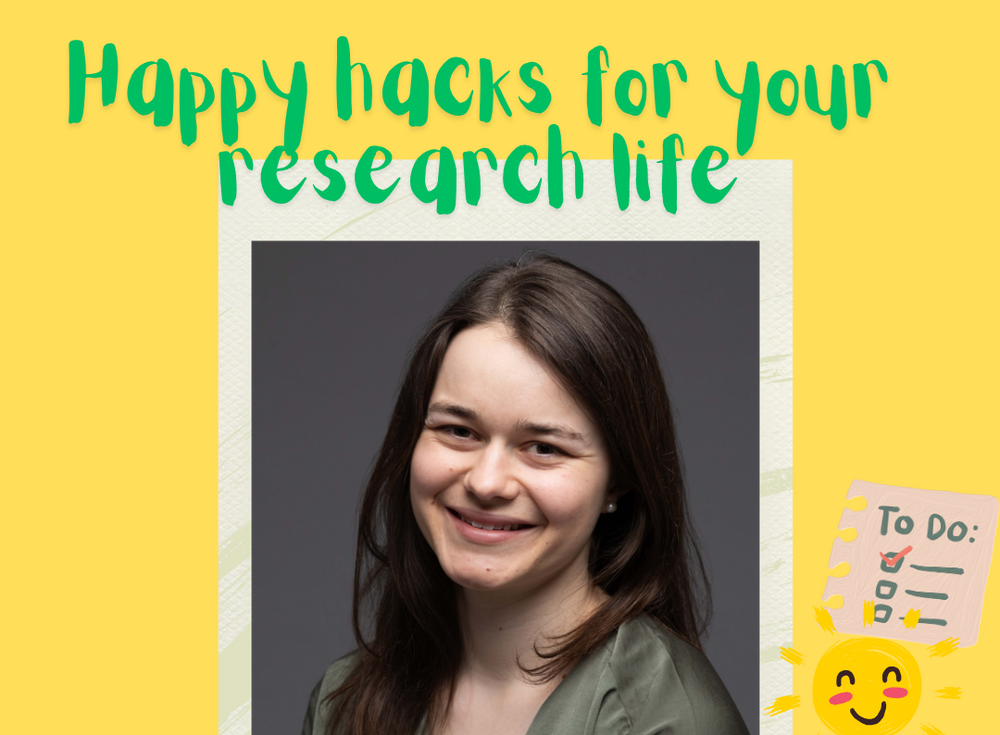
- Antonia Knapp from the Institute of Environmental Systems Sciences in the Sustainability, Climate Change and Human Behaviour (SCCHuB) research group
Antonia Knapp's daily work:
I work at the intersection of the bioeconomy, technology and society. In my PhD thesis, I am investigating the social dimension of biorefineries. I use social network analysis and semi-structured interviews to understand how actors, relationships and governance structures influence innovation and conflict in the context of bio-based systems.
The "happy hack" that makes Antonia more efficient/creative/motivated at work:
Whenever I feel exhausted or my brain won’t work anymore, I stand up go into the kitchen and get a cop of coffee. Sometimes colleagues are around and I ask them if they want to join. Then we have a nice chat, depending on the mood on work or just leisure activities. When the weather allows it, we go on the inner yard balcony and enjoy the sun. This really helps me to reload my batteries and be productive afterwards.
And the challenge in her research life that she still needs a hack for:
I feel I need more tools, better arguments, or simply a thicker skin to highlight the significance of my work as a social scientist in a project – or indeed in a world – where natural science approaches tend to receive more attention and recognition.
However, I believe that the wicked problem of climate change demonstrates how important collaboration across all disciplines is, so that social sciences too can attain the status they deserve.
What is your own happy hack? Let us know!
Find the full series of interviews here: How to hack your research life - Research Careers Campus Graz
(Interview: Johanna Stadlbauer, 26.5.2026, picture credit: Uni Graz/Kommunikation)