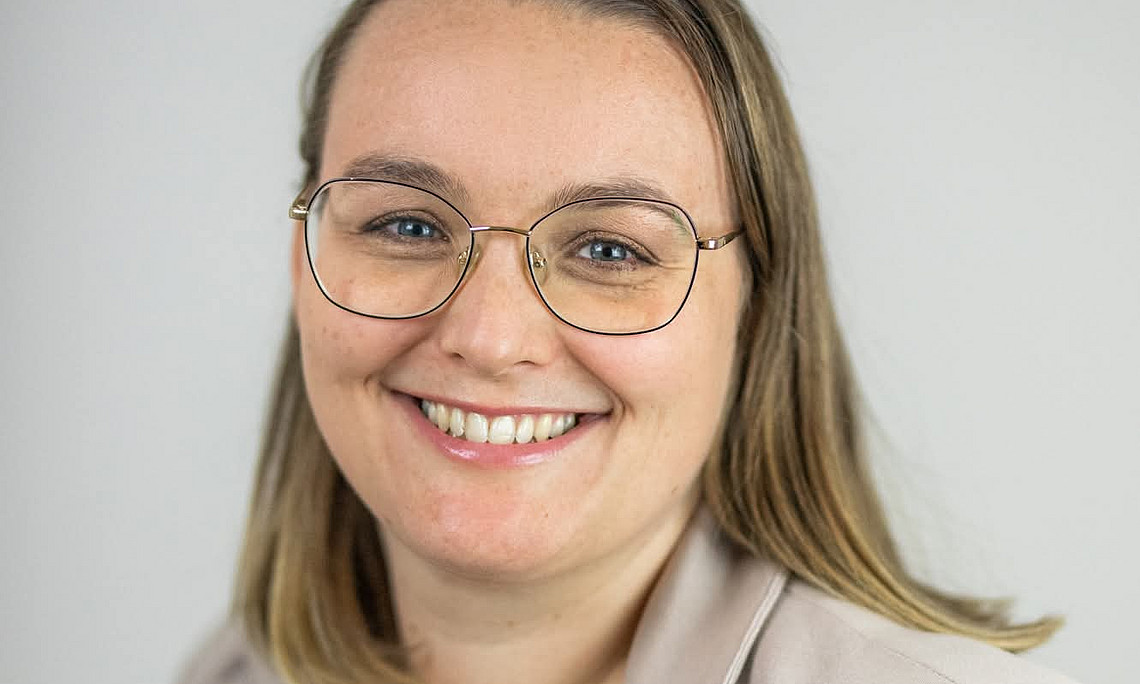




How does a workplace psychologist approach a senior leadership position? What can you do to establish a culture of collaboration that connects researchers regardless of official position and seniority? We've asked the new dean of the Faculty of Natural Sciences, social psychology professor Katja Corcoran!
Here are her three answers to our three questions.
1) Which activities for contributing to a positive research environment are most important in your view, and what is your personal contribution to this cause?
One central activity for a positive research environment is the exchange of ideas and discussions of results. Ideally, everybody, regardless of official position and seniority, feels comfortable to join in, ask questions, and make suggestions. The hierarchical structure and interdependence within the university could be a barrier for such an open atmosphere. Sometimes it is easier to actively participate in discussions outside of your own research group. Therefore, I (financially) support young researchers to participate in summer schools and workshops and also serve as mentor or teacher and organize such events.
A second important activity is listening to people and get to know them – their visions, needs, worries. Research is a highly demanding environment and we need to support each other. But I can’t support a person if I don’t know her or him. Therefore, I take time to meet and talk with people – about their work but also about their life. It might help that I am in general very curious about people.
A third crucial element for a positive research environment is a positive failure and mistake culture. We all make mistakes, but it is super hard to admit them and to talk about them. There are some activities to encourage talking about failures – I for example once gave a talk at a young researcher workshop about my failures. However, more important is my reaction as a person in a leadership position when I learn about a mistake a person made. My goal would be to admit the mistake instead of hiding it and to concentrate on the future and the question how prevent further mistakes.
2) What do you personally get out of your engagement for a more collegial academia?
In academia, especially once you become a professor, you have a lot of freedom and possibilities to shape your environment. I strive for a collegial academia, because I life in this academia and I personally will profit from the positive atmosphere of such an environment. Collegial means that we will support each other and that we work together instead of against each other. As a dean in a time of tight budget, this seems essential for finding good solutions.
3) What would you suggest to others who want to take first steps for becoming active in co-creating their working environment?
I studied psychology with a focus on work and organizational psychology. This background might have prepared me a little more for a leadership position than researchers in other fields – at least theoretically. In addition, I take part in special workshops and trainings by the university. Not everything is new for me and not everything is good – but it always helps me to step out of my working routine and gives me time to reflect. I would suggest to other: take your leadership responsibility serious. Inform yourself, train yourself, get feedback.
Thanks a lot, Katja Corcoran, for taking the time to answer our questions!
The Research Careers Campus Graz showcases people and networks which shape our research environment here in Graz - towards a more collegial, friendly and diverse academia, where all research talents can thrive. More here.
Picture credit: Uni Graz/wildundwunderbar, Interview: Johanna Stadlbauer, RCC, 6.10.2026